
A fatal elephant-handling video circulating again online is real, but it is not a recent incident. The tragedy occurred on March 3, 2019, in Karappuzha, Kottayam, in the southern Indian state of Kerala.
Arun Panicker, a 40-year-old mahout from Chennithala in Alappuzha, died after slipping beneath an elephant named Bharath Vishwanathan while preparing the animal for a bath, according to police and contemporary local reporting.
The footage is distressing, but several details in widely shared captions are unsupported. The elephant was not described in credible reports as a “rescue elephant,” and the incident did not occur on a riverbank. Reports placed it in a bathing area near a temple where the elephant was due to appear at a festival later that day.
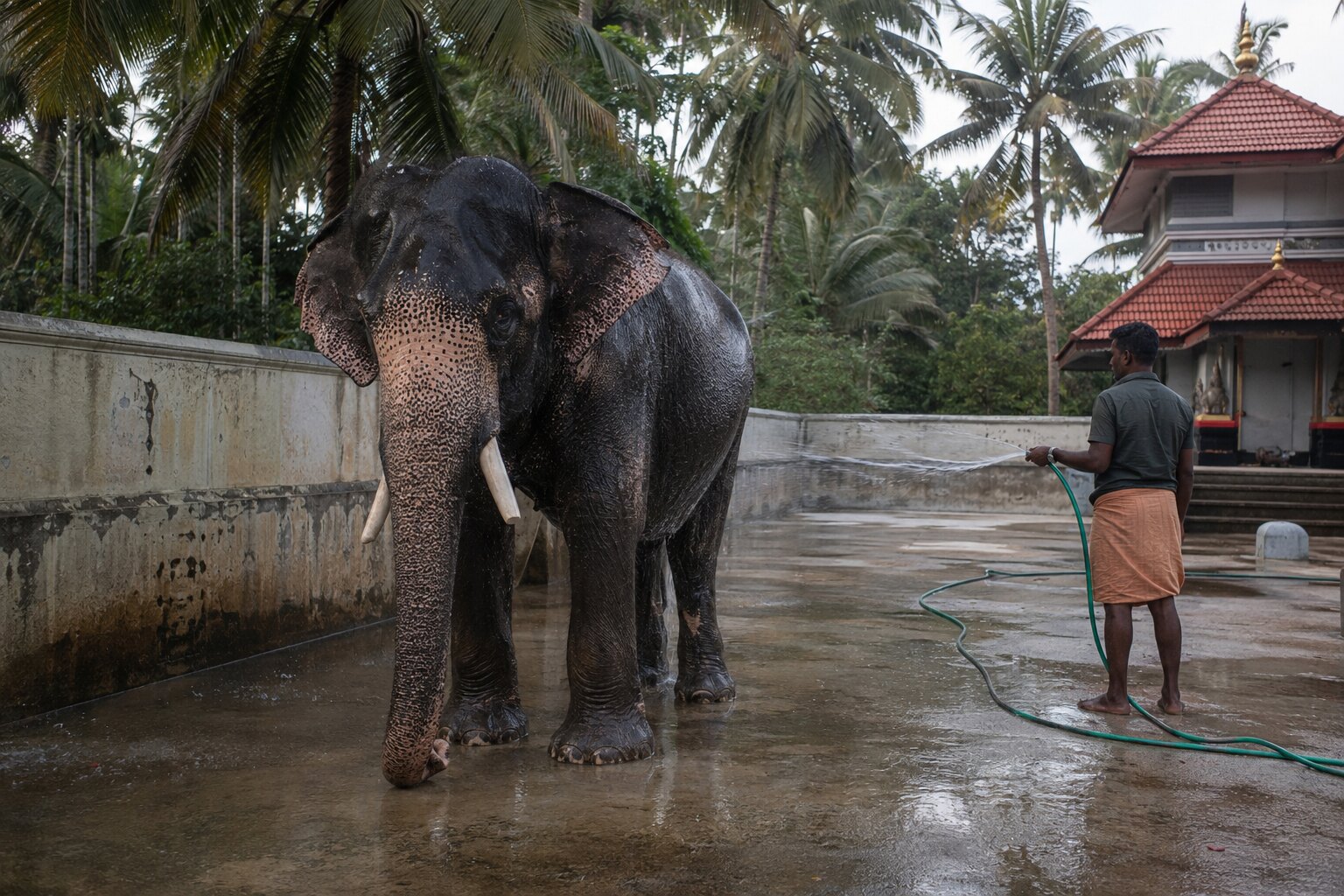
What the footage and police account show
Panicker had sprayed the elephant with a hose and ordered it to lie down on its right side. The elephant instead began lowering itself to the left, according to the Times of India.
The report said Panicker became angry and tried to beat the elephant. Police similarly told Press Trust of India that he allegedly struck the animal and ordered it to lie down. At that moment, he lost his footing on the wet surface and fell into the animal’s path.
As Bharath Vishwanathan lowered its multi-ton body, Panicker became trapped between the elephant and the ground. Another person rushed into the enclosure and tried to command the elephant to move, but Panicker died at the scene.
Some viral posts describe the elephant as knowingly retaliating. Others say the animal was completely unaware of the man beneath it. Neither interpretation can be established from the available evidence. The official account treated the death as a freak accident, and no reliable source established the elephant’s intent.
A human death and an animal-welfare warning
Panicker’s death was a devastating loss of human life. It should not be celebrated or reduced to an online morality tale, regardless of what viewers think about the way he handled the elephant in the seconds before he fell.
At the same time, the video shows the danger inherent in controlling an animal of enormous strength through close physical contact and punishment. Asian elephants are wild animals, even when they have spent years living under human control. A moment of confusion, fear, resistance or simple movement can be fatal at such close range.
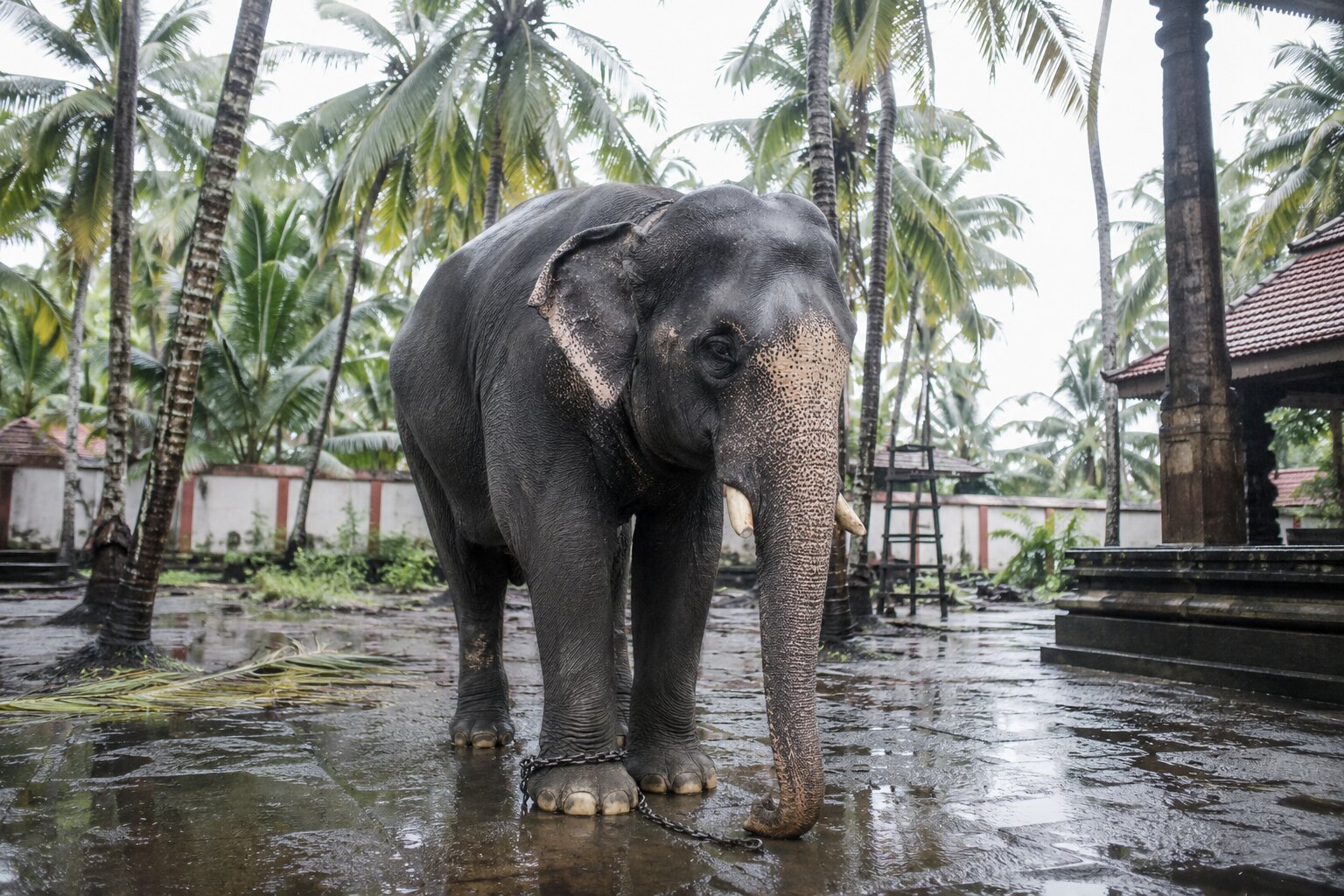
Animal-welfare organizations have repeatedly warned that rides, performances, bathing encounters and other direct-contact activities place both elephants and people at risk. Punishment can also intensify an already stressful relationship between captive animals and their handlers.
The elephant should not be assigned human motives
Bharath Vishwanathan should not be portrayed as a murderer, an avenger or a villain. The footage documents a powerful elephant following a command to lower its body while a handler fell into a lethal position.
The more useful lesson is not that one side deserves blame. It is that systems built around close control of captive elephants can expose workers to extreme danger while denying elephants the distance and autonomy appropriate for a wild species.
A man lost his life in seconds. An elephant remained inside the same human-controlled system. Remembering both realities allows the tragedy to prompt a more honest conversation about worker protection, humane handling and whether elephants should be used in festivals and close-contact attractions at all.
Sources
- The Times of India: Mahout gets trapped under jumbo, dies
- Press Trust of India via Business Standard: Elephant crushes mahout to death in freak incident
- PETA: Captive-elephant incidents and direct-contact risks
