
Images of an elderly captive elephant covered in vivid pink colour for an artistic photoshoot in Jaipur, India, have triggered international criticism and renewed scrutiny of how elephants are used in tourism, entertainment and commercial art.
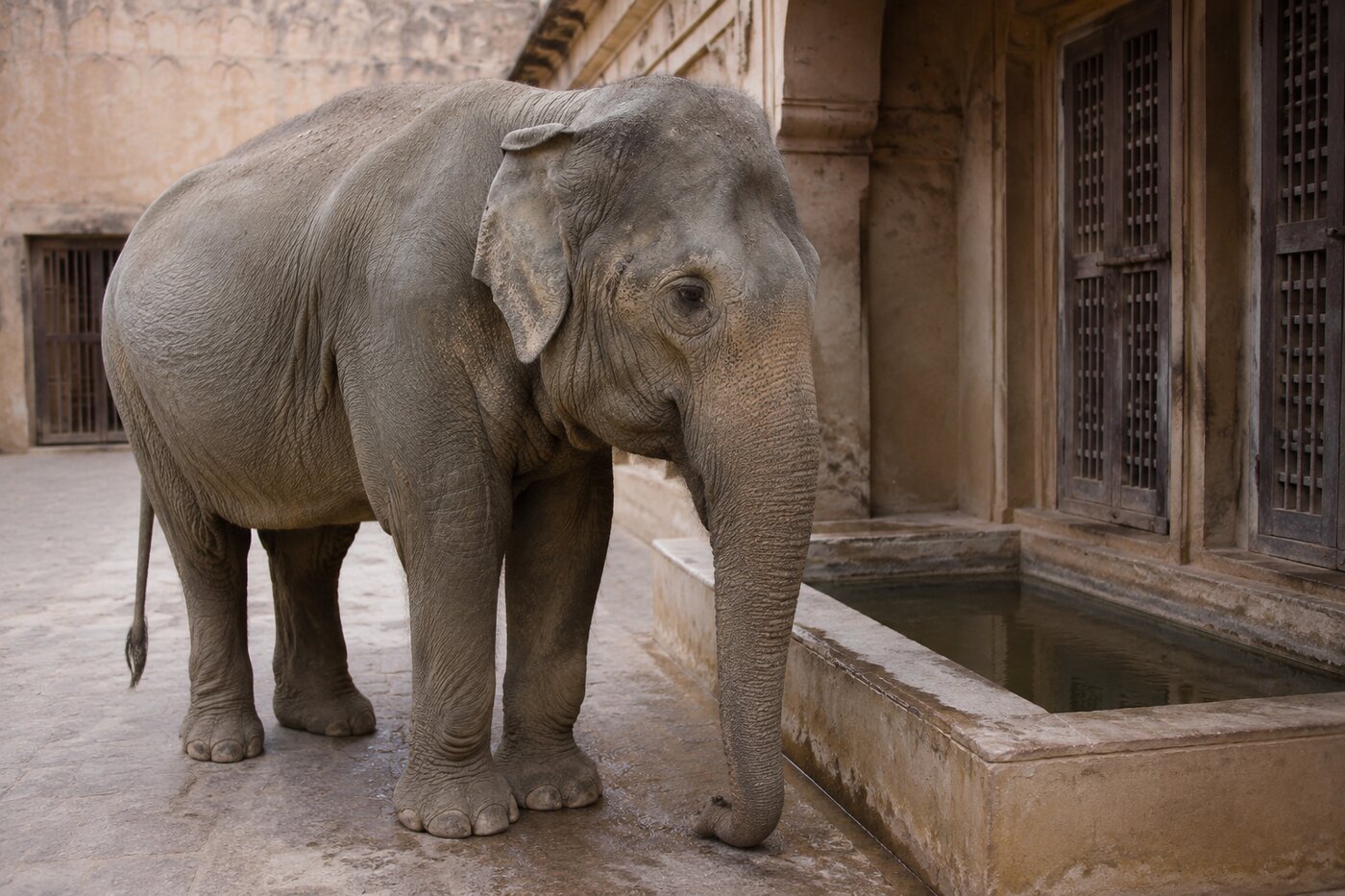
The elephant was Chanchal, a female associated with Jaipur’s Hathi Gaon community. Russian photographer Julia Buruleva staged the shoot in November 2025 with a model and the elephant coloured pink near a historic sandstone setting.
Chanchal died on February 4, 2026, several months after the session. That timing has become central to online posts about the controversy—but the available evidence does not establish that the photoshoot or colour caused her death.
A postmortem reviewed by reporters attributed her death to cardiac arrest associated with old age. Sources have reported different ages for Chanchal, ranging from about 65 to 70; a doctor involved with the postmortem panel reportedly identified her as 67.
What is known about the photoshoot
Buruleva has defended the project, saying the colour was an organic, locally produced festival powder and that Chanchal was supervised by her handler. The photographer and elephant’s owner said the application was brief and the colour was washed away shortly afterward.
Chanchal’s owner, identified by Indian media as Sadiq or Shadik Khan, told reporters that he was offered ₹2,500 for the elephant’s participation. Accounts described the shoot as lasting roughly 10 to 15 minutes.
The photographer said Chanchal appeared calm and showed no visible signs of distress. Those assertions describe what the photographer and owner say they observed; they do not resolve the broader ethical question of whether a captive animal should have been altered and posed for a commercial artwork.
After the images went viral in March, Rajasthan Forest Department officials opened an inquiry into whether the necessary permissions had been obtained and whether animal-welfare requirements were followed. No publicly documented final outcome of that inquiry was located at the time of publication.
The commercial divide behind the image
The money attached to the project sharpened criticism. While the owner said he was offered ₹2,500, PETA India reported that prints depicting the pink elephant were later marketed for more than ₹3 lakh each.
PETA India called on Buruleva to remove the print or donate all proceeds to elephant protection. The request reflects a larger concern among advocates: the living animal supplied the striking subject, yet the commercial value created from her image was dramatically greater than the reported payment for her participation.
That contrast does not itself prove a legal violation or establish that Chanchal was physically harmed during the shoot. It does, however, illustrate why critics reject the idea that the controversy is only about whether the powder was toxic.
A debate larger than one photoshoot
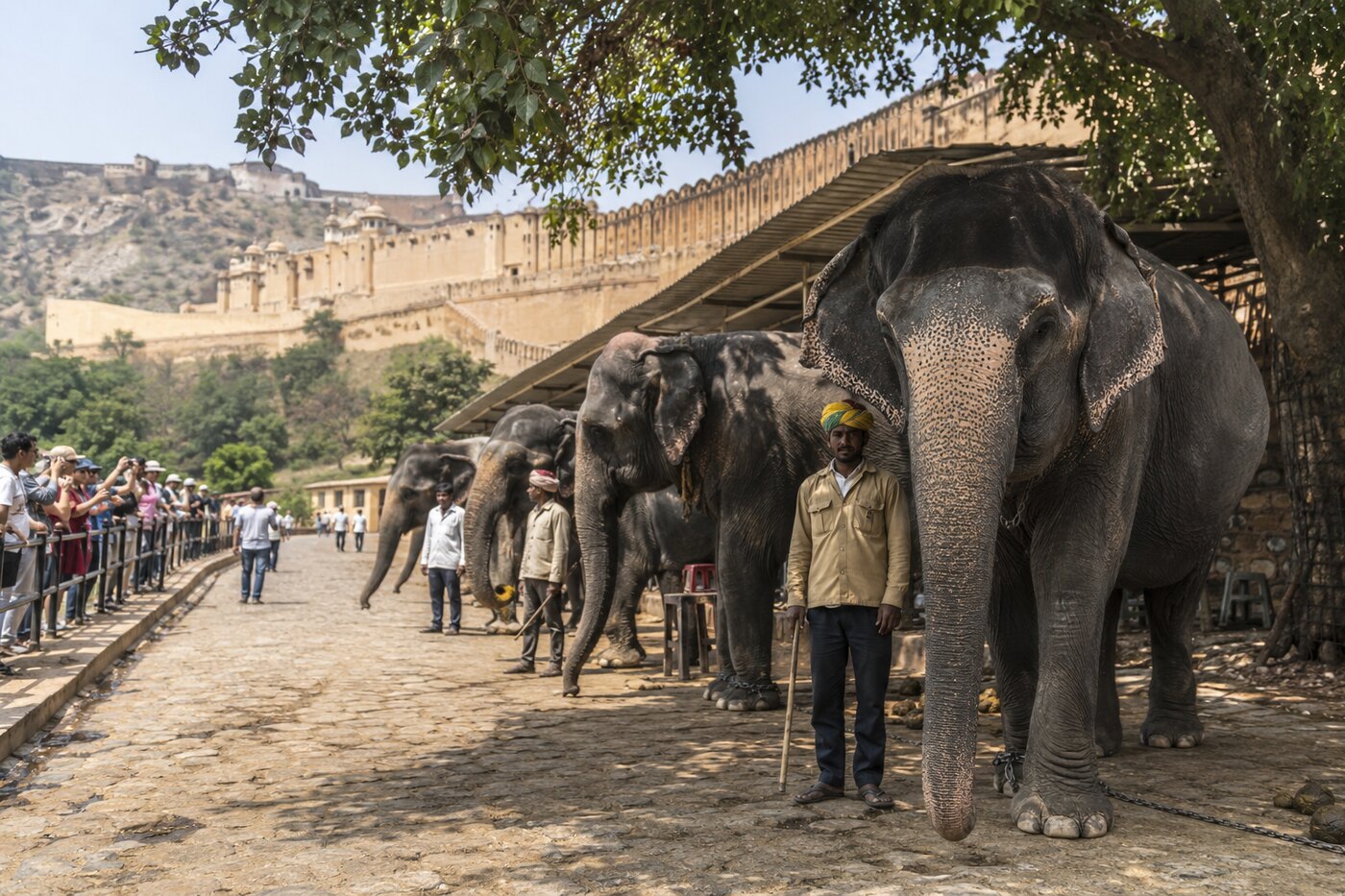
Chanchal had previously been used in Jaipur’s elephant-tourism industry. The Indian Express reported that she had once carried visitors along the route toward Amber Fort and, after retiring from that work, continued to offer rides within Hathi Gaon.
Animal-welfare organizations argue that the photoshoot cannot be separated from this wider system. World Animal Protection said painting an elephant for a staged image reinforces the idea that captive elephants are canvases, attractions or props available for human experiences.
Handlers in Hathi Gaon have offered a different perspective. They say their families have cared for elephants for generations, that tourism income supports the animals and their caregivers, and that Chanchal was treated as part of the community.
Both the defence and criticism can be reported without making an unsupported claim about Chanchal’s death. The postmortem information points to an age-related cardiac arrest, and no verified evidence connects the pink powder to her death.
The unresolved question is therefore not whether a viral image killed her. It is whether an elderly animal already living under human control should have her body, appearance and history transformed into a spectacle—and who benefits when that spectacle becomes valuable.
Sources
- The Indian Express — Chanchal, the photoshoot and reported payment
- NDTV — Jaipur photoshoot and reported natural death
- Gulf News — reported postmortem findings
- World Animal Protection — inquiry and welfare concerns
- PETA India — commercial print and conservation request
- Wildlife SOS — captive-elephant tourism context
