
When floods rise, wildfires move or storms destroy homes, animals can become trapped, displaced or separated from the people who care for them. Rescuing them safely requires more than compassion: responders need animal-handling knowledge, protective equipment, transport plans and coordination with veterinary and sheltering partners.
The United States already recognizes animals as part of disaster planning. The important question is whether every community has turned that principle into practical, rehearsed capability.
Animal planning is already part of the federal framework
The idea is not new or merely symbolic. After Hurricane Katrina exposed serious gaps in pet evacuation, the federal Pets Evacuation and Transportation Standards Act of 2006 amended disaster law to account for the needs of people with household pets and service animals.
Current Federal Emergency Management Agency guidance for emergency operations plans includes considerations for animal preparedness, evacuation support, shelter operations and recovery. FEMA’s training system also lists courses titled Animals in Disaster: Awareness and Preparedness and Animals in Disaster: Community Planning.
The U.S. Department of Agriculture’s National Agricultural Library points officials and animal owners to those modules and to emergency-management best practices covering animal search and rescue, evacuation, transportation, sheltering and disaster medical response.
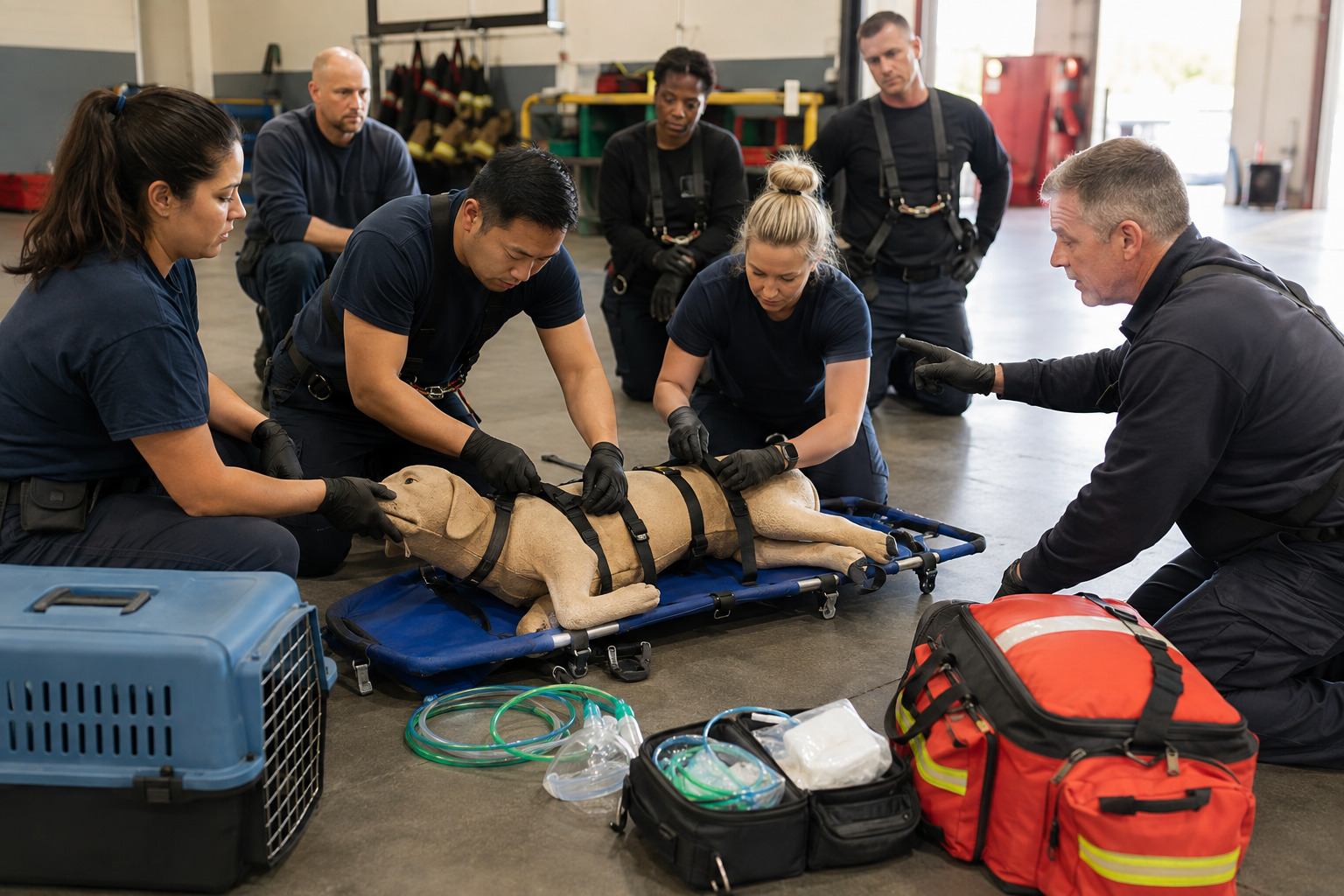
Written plans must become practiced skills
A policy document cannot carry a frightened dog through floodwater or move a cat from a smoke-filled building. Responders may encounter animals that bite, scratch, flee or freeze when stressed. Large animals create additional transport and containment challenges, while livestock, wildlife and household pets may require different specialists.
Training can help teams assess risk, use leashes and carriers correctly, prevent escape, recognize urgent medical needs and avoid exposing people or animals to unnecessary danger. It can also clarify when firefighters, animal-control officers, veterinarians, technical rescue teams or wildlife professionals should take the lead.
This does not mean every responder must become an animal-rescue specialist. A realistic local model could provide basic awareness for all personnel, advanced skills for designated teams and mutual-aid agreements for incidents beyond local capacity. Equipment and communications should be tested during exercises, not discovered for the first time during an evacuation.
FEMA’s National Preparedness Course Catalog currently includes an Animal Emergency Services category, evidence that specialized education exists. Availability, however, is not the same as universal adoption. Staffing, budgets, geography and local hazards all influence how much capability a community can maintain.
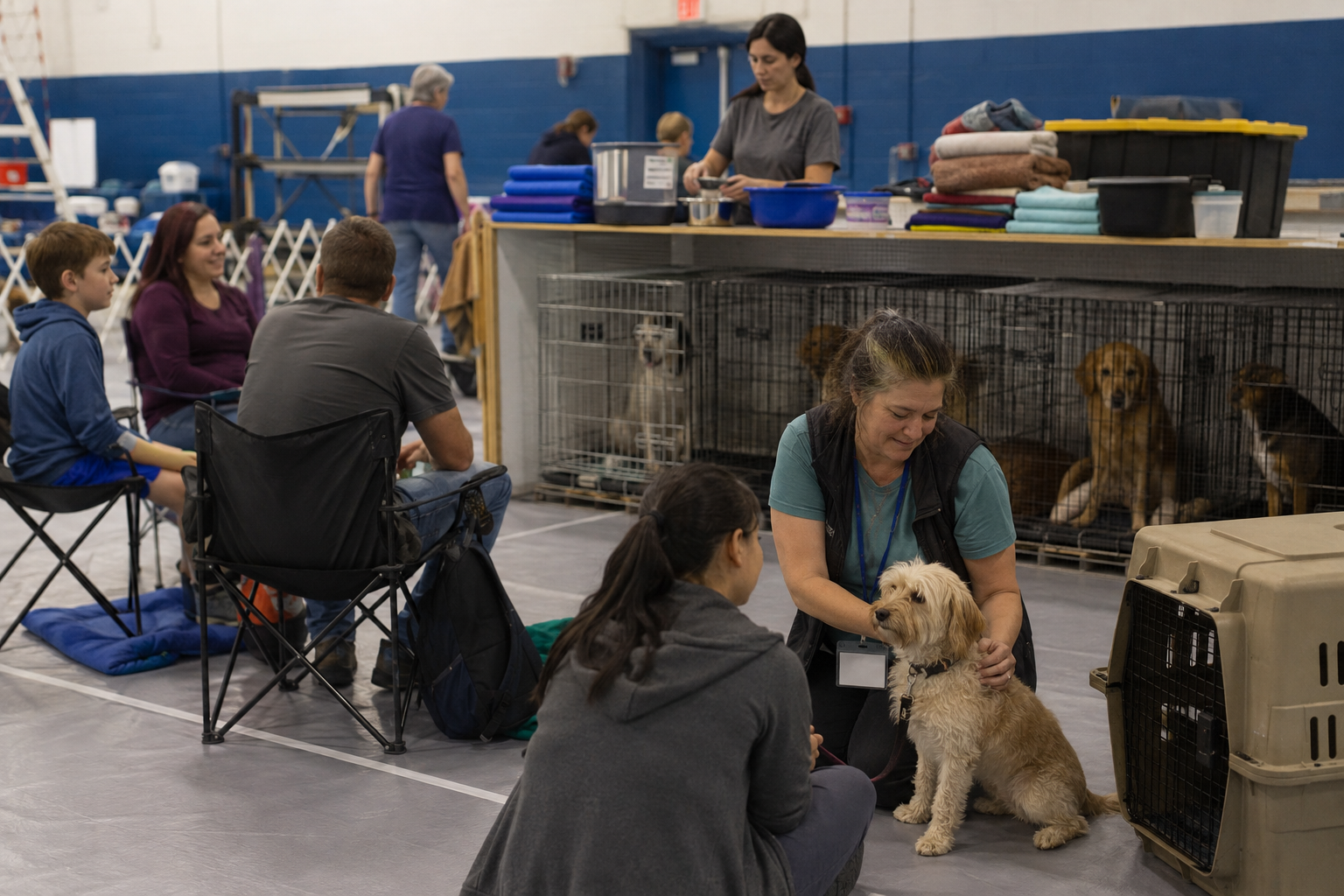
Helping animals can strengthen human evacuation
Pet planning is also human-safety planning. People may hesitate to evacuate if they believe they must abandon an animal, and a rescue that is improvised too late can put owners, volunteers and emergency personnel at greater risk.
Ready.gov urges families to build evacuation plans for their pets, create a buddy system, maintain identification and contact local emergency-management offices about available accommodations. Individual preparation is essential, but it works best when public plans provide clear destinations, transport options and instructions.
Communities can strengthen readiness by identifying pet-friendly or co-located sheltering, maintaining animal supplies, including animal organizations in exercises and publishing a clear procedure for reporting animals left behind. Plans should also address reunification, documentation and temporary care after the immediate danger has passed.
No credible national count can prove exactly how many animals additional training would save. What the established framework does show is that animal evacuation and sheltering are recognized disaster responsibilities, and training resources already exist. The remaining challenge is turning guidance into dependable local action before the next siren sounds.
Sources
- FEMA: Developing and Maintaining Emergency Operations Plans
- FEMA Emergency Management Institute: Animals in Disaster courses
- USDA National Agricultural Library: Disaster Planning with Animals
- Ready.gov: Prepare Your Pets for Disasters
