
New research indicates that polar bears face an unprecedented risk of extinction due to the prolonged Arctic summers caused by climate change.
These findings emphasize the urgent need for conservation efforts to protect these iconic Arctic predators.
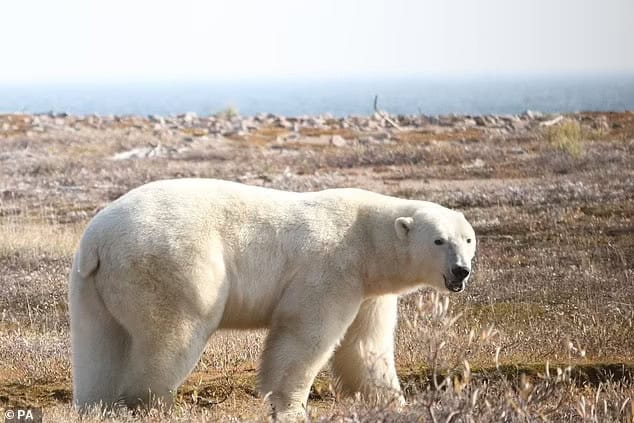
Polar bears, primarily found in regions such as Canada, Alaska, Russia, Greenland, and Norway, rely heavily on sea ice for hunting seals, resting, breeding, and caring for their young.
However, as Arctic summers lengthen, the bears spend more time stranded on land, away from their essential sea ice habitat.
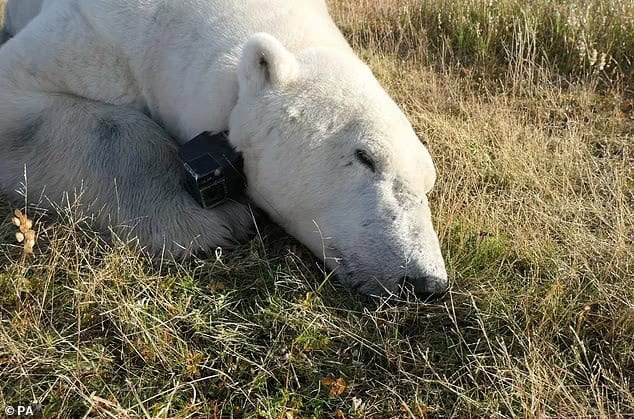
A recent study published in Nature Communications closely observed 20 polar bears during three summer weeks, tracking their behaviors as they tried to maintain energy reserves.
Despite attempting various strategies, including resting, scavenging, and foraging, nearly all the bears lost weight rapidly, averaging around 2.2 pounds daily.
Contrary to speculation that polar bears might adapt to longer ice-free seasons by resting or eating terrestrial food like their grizzly bear relatives, the study found little success with these strategies.
Dr. Charles Robbins, co-author of the study, emphasized that polar bears are distinct from grizzly bears and cannot sustain themselves on land indefinitely.
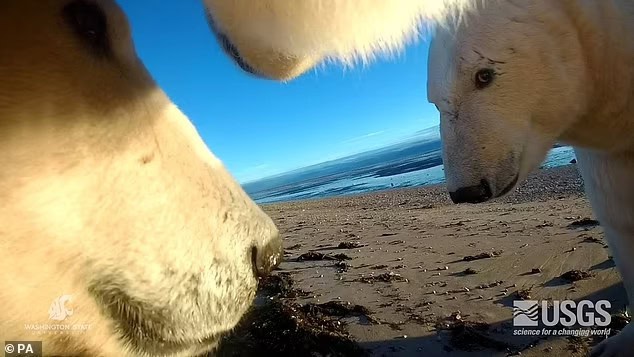
To understand polar bear behavior and energy expenditure on land, researchers fitted bears with collars equipped with video cameras and GPS trackers in Manitoba, Canada’s western Hudson Bay region.
The study revealed a diversity of behaviors among the bears, with some conserving energy by resting. In contrast, others actively searched for food, consuming bird and caribou carcasses, berries, kelp, and grasses.
Despite their efforts, the terrestrial foods provided limited energy benefits, with bears expending more energy to access these resources than they gained. Only one bear out of the 20 observed gained weight after finding a dead marine mammal on land.
The study’s lead author, Dr. Anthony Pagano, highlighted the grave implications of these findings for polar bear populations across the Arctic.
He emphasized that as the ice-free period continues to grow, polar bears are at risk of starvation, particularly as they are forced onto land earlier, disrupting their regular energy acquisition periods.
The research focused on the southernmost extent of the polar bear range in western Hudson Bay, where climate warming is accelerating, leading to a decline in the bear population.
Dr. Pagano warned that increased land use could exacerbate starvation without intervention, especially among adolescent bears and females with cubs.
In conclusion, the study underscores the urgent need for comprehensive conservation measures to mitigate the impact of climate change on polar bear populations and ensure their survival in the rapidly changing Arctic environment.
Read More Bear News
