
Seventy-eight pit bull-type dogs rescued from three Alabama properties will not be returned to the man who kept them for fighting purposes. Carlton Lenard Adams has been sentenced to 120 months in federal prison and ordered to pay $548,449 in restitution for the animals’ care.
The June 26, 2026, announcement from the U.S. Department of Justice brought together a criminal prosecution, a separate civil forfeiture case and an extensive effort to protect and evaluate the dogs.
Adams pleaded guilty to six federal counts
Adams, 53, of Bessemer and Adger, pleaded guilty in January to four counts of possessing dogs for fighting purposes and two counts of possessing firearms after a felony conviction. He was sentenced in May to 10 years in prison. The court imposed the $548,449 restitution order the following month to cover costs associated with caring for the 78 rescued dogs.
According to court documents summarized by federal prosecutors, Adams maintained the dogs at three locations—two properties in Bessemer and one in Adger. Some animals had scars or other injuries when authorities recovered them, while others were living in conditions the Justice Department described as extreme neglect.
At the time of the rescue, federal officials said 78 was the second-greatest number of dogs recovered from a single defendant in any federal case. That qualification matters because a later federal investigation involving another defendant resulted in the seizure of 190 dogs.
Evidence showed an organized conditioning operation
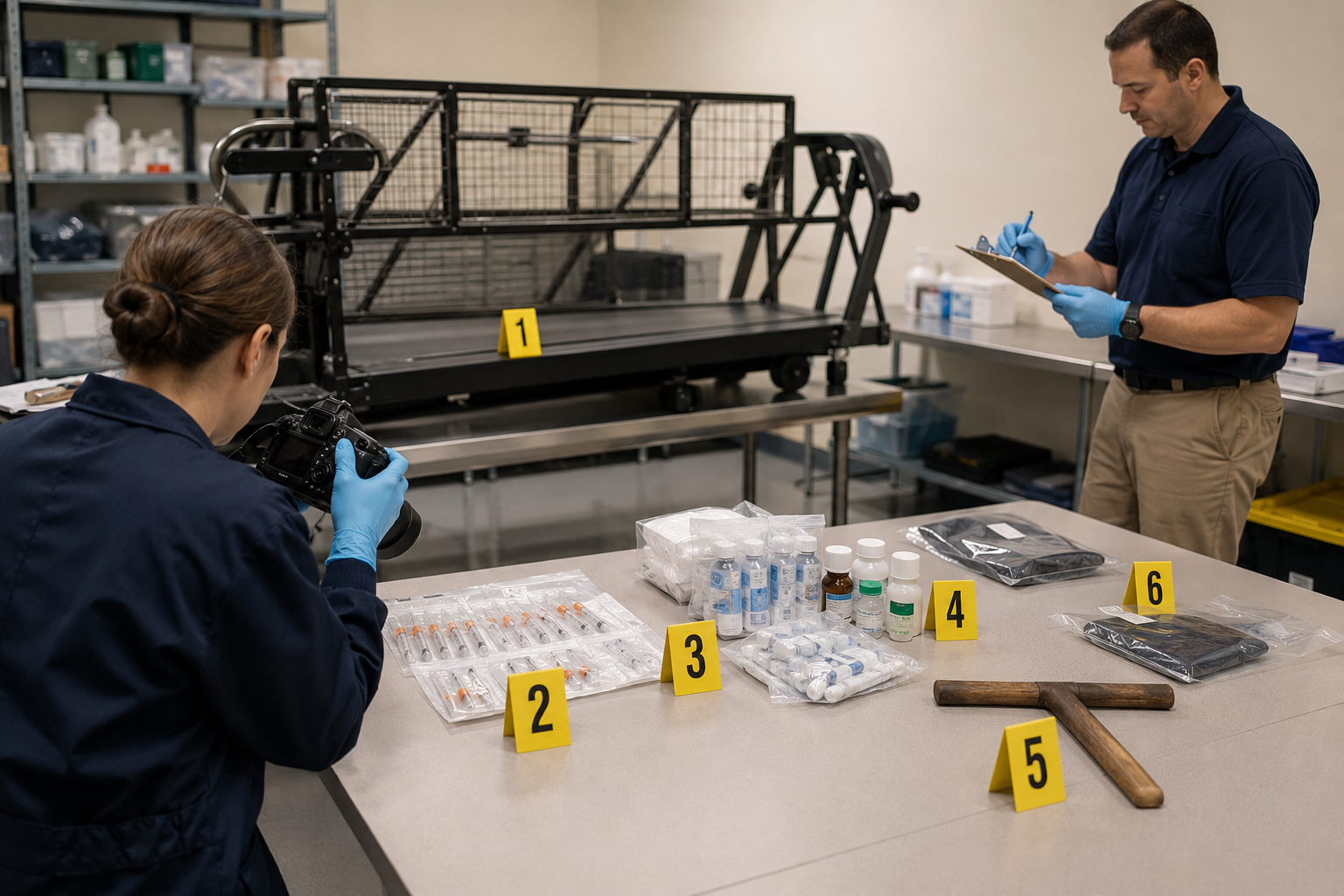
Investigators recovered equipment and supplies associated with training and keeping dogs for fighting. The list included modified treadmills designed to hold dogs in place for conditioning, injectable veterinary steroids, syringes, suture material, skin staplers, intravenous bags and lines, a homemade breeding stand and a break stick.
Authorities also found two pistols and a semi-automatic shotgun commonly known as a “Street Sweeper.” Federal law classifies that shotgun as a destructive device. The firearms charges reflected Adams’ prior felony status as well as the broader criminal evidence uncovered during the investigation.
The case was investigated by the U.S. Department of Agriculture Office of Inspector General, the FBI and the Alabama Law Enforcement Agency. Prosecutors emphasized that federal law prohibits more than staging a fight: possessing, training, transporting, delivering, selling, purchasing or receiving dogs for an animal-fighting venture that affects interstate commerce is also illegal.
A forfeiture case gave the dogs a different future
The dogs were cared for through a program administered by the U.S. Marshals Service. Federal prosecutors also pursued a separate civil forfeiture action in the Northern District of Alabama. Because that action succeeded, the dogs did not have to be returned to Adams.
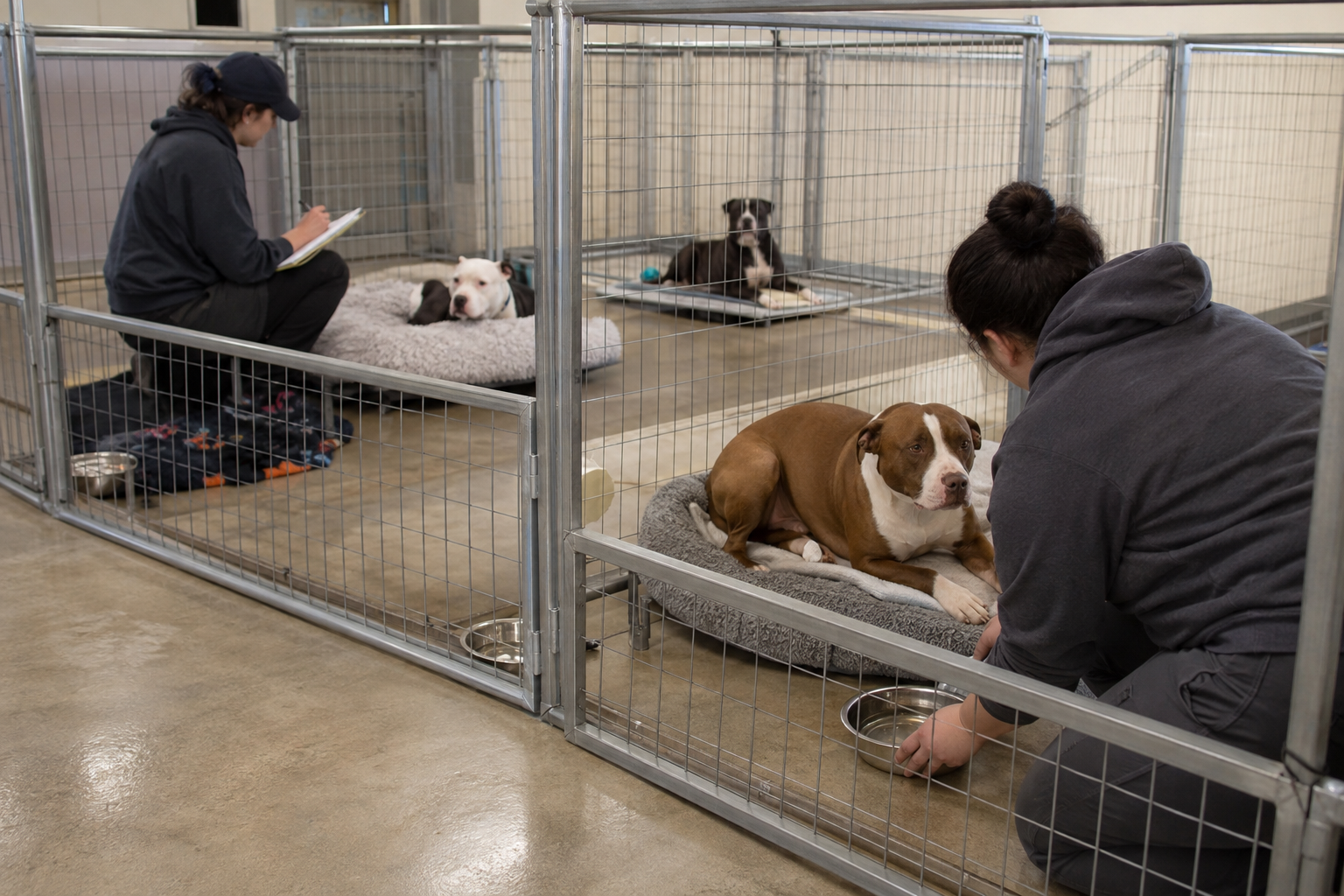
Instead, officials said the animals were rehabilitated and evaluated for possible adoption. That wording does not establish that every dog has already been adopted, but it confirms that each animal could be considered individually for a life beyond the conditions from which they were removed.
The restitution order recognizes that large-scale animal seizures do not end when authorities leave a property. Safe housing, food, veterinary treatment, behavioral assessment and long-term placement require sustained work and substantial resources.
For the 78 dogs, the most important result is that the federal case separated them permanently from the defendant and created a path toward recovery. For investigators, the conviction also demonstrates how dog-fighting cases can involve animal-welfare crimes, weapons offenses and extensive evidence spread across multiple properties.
Sources
- U.S. Department of Justice: Sentencing, restitution and rescue details
- WBRC: Jefferson County sentencing report
