
More than 230 rescued mustangs are now roaming across over 30,000 acres at a private nonprofit refuge in northwest Colorado, according to the Wild Horse Refuge’s current website.
The extraordinary landscape gives horses removed from public rangelands room to travel in social groups across sagebrush country near the places where many of them once lived wild.
But posts now circulating online blur important details about who created the refuge and when. The state of Colorado did not buy the land. The Wild Animal Sanctuary, a Colorado nonprofit, announced its acquisition of a 22,450-acre former cattle ranch in January 2023 and established the Wild Horse Refuge there.
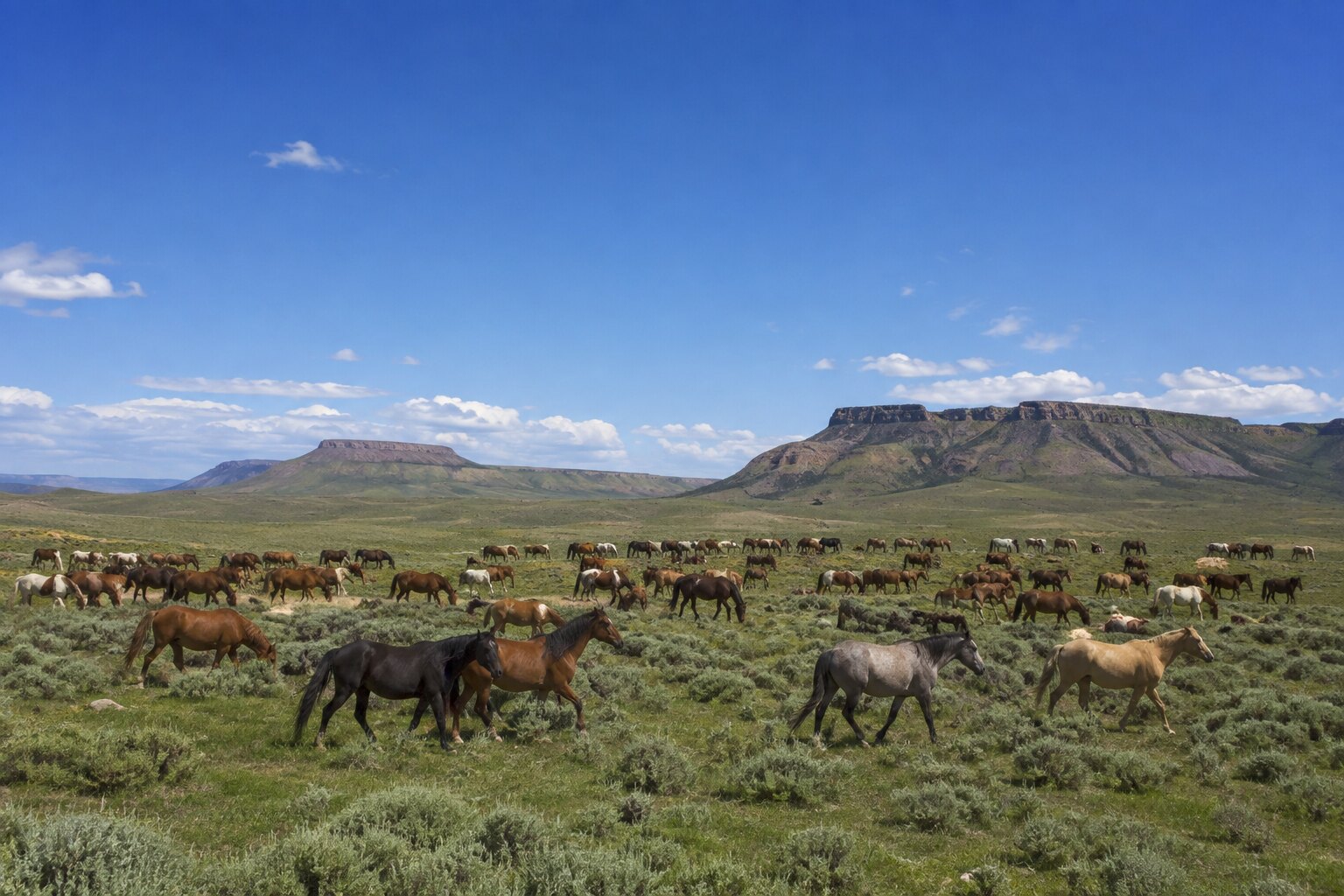
From a cattle ranch to a mustang refuge
The original property, formerly called Rio Ro Mo Ranch, covered more than 29 square miles near Craig and Steamboat Springs. At 22,450 acres, it was larger than Manhattan’s land area.
The Wild Animal Sanctuary said the property was acquired in response to federal roundups in Colorado’s Sand Wash Basin and Piceance-East Douglas herd management areas. Horses removed from those ranges can face adoption, sale or long-term holding, depending on their status and placement opportunities.
The nonprofit envisioned the ranch as a lifelong home for as many as 500 mustangs. That figure described capacity and a long-term goal—not the number of horses immediately moved onto the land.
The refuge’s current website now describes more than 30,000 acres of contiguous open space and says more than 230 mustangs live there. It calls the property the largest mustang sanctuary in the United States.
What “freedom” means inside a sanctuary
The horses are not being returned to unfenced public land, and they remain under sanctuary management. Still, their daily environment is dramatically different from a crowded holding corral or small pasture.
The refuge says it does not use paddocks, stock pens or small fenced pastures for its resident mustangs. Instead, the animals can move across 46.8 square miles, choosing when to travel, graze, rest and interact with one another.
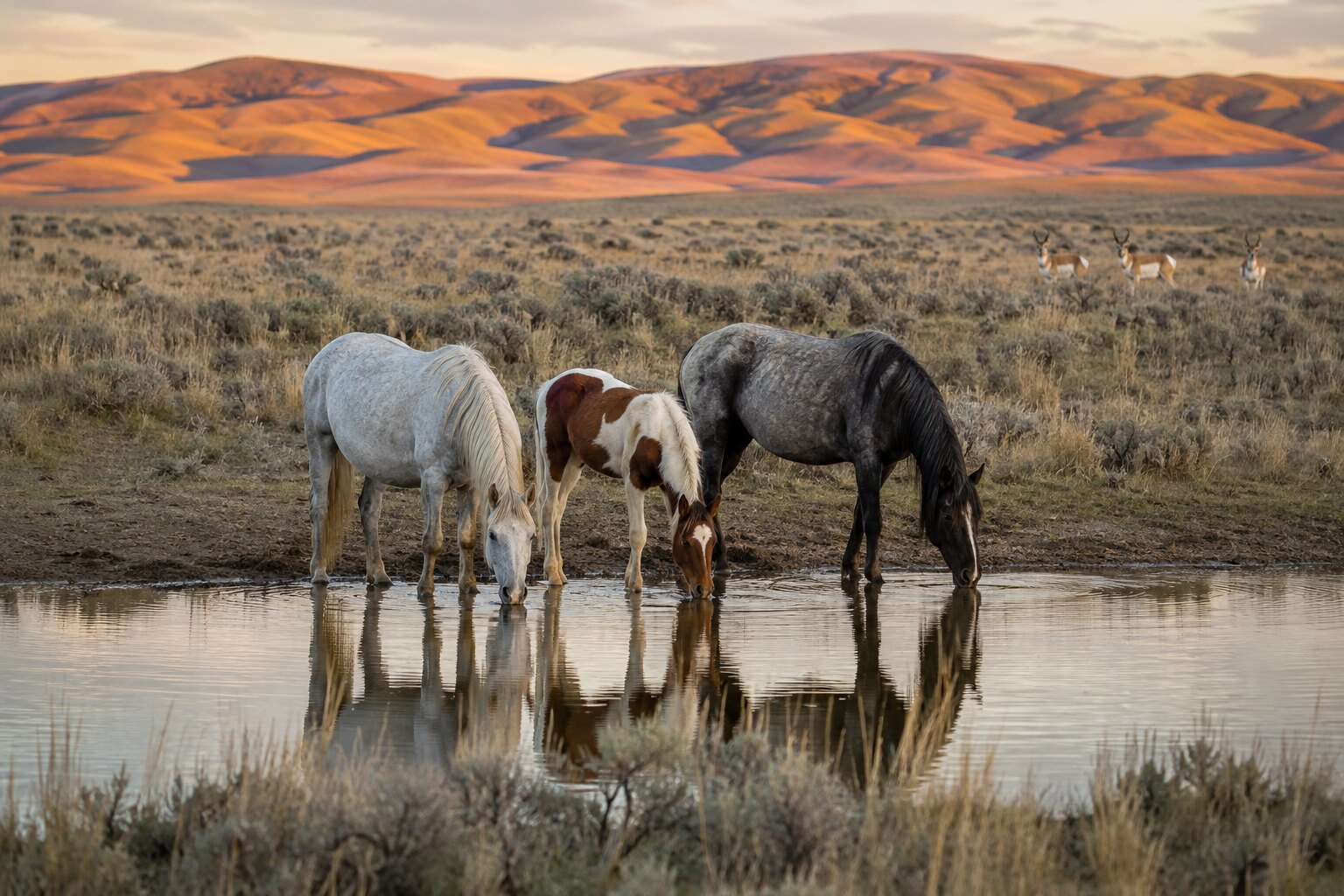
The property also supports native wildlife including deer, elk, pronghorn, mountain lions, bobcats, sage grouse and golden and bald eagles. Converting a former cattle operation into protected sanctuary land therefore has implications beyond the horses themselves.
Managing such a vast refuge still requires fencing, water systems, monitoring, veterinary care and continuing financial support. It is not the same as leaving horses entirely unmanaged. It is a long-term-care model designed to preserve as much space and natural behavior as possible for animals that cannot simply be placed back on federal ranges.
A refuge, not a solution to every roundup
The Wild Horse Refuge can transform life for hundreds of individual horses, but it cannot by itself resolve the broader dispute over wild-horse management in the American West.
The Bureau of Land Management says removals are sometimes necessary when horse populations exceed what drought-affected ranges can sustain. Advocates continue to press for expanded fertility control, habitat protection and management practices that reduce reliance on helicopter roundups and off-range holding.
Sanctuary also comes after removal; it does not prevent horses from losing their original home. Even so, for mustangs already taken from Colorado’s herd areas, 30,000 acres offer something rare: enough room to run until they choose to stop.
The most accurate version of this story is still powerful. A nonprofit—not the state—turned a former cattle ranch into an expanding refuge, and more than 230 rescued mustangs now have a permanent home across one of the largest landscapes devoted to their care.
Sources
- Wild Horse Refuge: Current acreage and mustang population
- Wild Horse Refuge: The refuge and its history
- The Wild Animal Sanctuary: 2023 acquisition announcement
- 9News Colorado: Refuge acquisition and roundup context
